Posted 1 April 2026
Report: “Transitions and Beyond: Women’s Work in Spanish and Portuguese Cinema & TV” Symposium (20–21 March 2026)
The symposium Transitions and Beyond: Women’s Work in Spanish and Portuguese Cinema & TV, held on 20–21 March 2026, was organised by the AHRC-funded project Leading Women in Portuguese and Spanish Film and TV (1970–1980). Bringing together scholars across institutions, the event examined women’s roles in Iberian cinema and television from the 1970s to the present, with particular emphasis on legacies, genealogies, trans-generational memory, and evolving forms of creative labour.
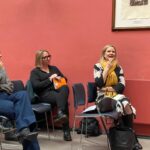

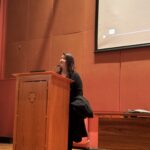
The symposium opened with a panel dedicated to Portugal, which foregrounded the intersections of politics, authorship, and creative practice. Hilary Owen (University of Oxford) explored post-censorship cinema highlighting cross-cultural dynamics between Portugal and Spain. Mariana Liz (University of Lisbon) addressed women, democracy, and historiography, proposing a re-evaluation of Portuguese film history through women’s contributions. Caterina Cucinotta (Universidad Rey Juan Carlos) examined filmmaker Rita Azevedo Gomes, emphasising experimentation, multi-professional roles, and cinema as a space of creative practice. Together, these papers stressed the fluidity of women’s labour and the transformative impact of political change.
Panel 2, “Connecting Past and Present,” turned to questions of continuity and affect. Savina Petkova (University of Cambridge) discussed repertory curatorship and screen-based mediation, suggesting a possible connection between practices in Spain, Portugal, and Eastern Europe. Cristina Pujol (Open University of Catalonia) analysed nostalgia and affect among contemporary women filmmakers engaging with the 1970s, drawing on data and archives. Abigail Loxham (University of Liverpool) addressed crisis, hope, and new feminist subjects in Spanish television. On the whole, the panel highlighted how contemporary practitioners reinterpret and reframe earlier feminist legacies.
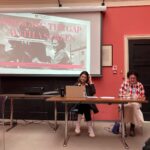
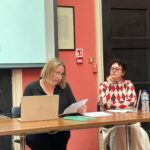
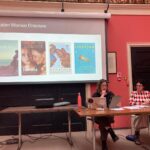
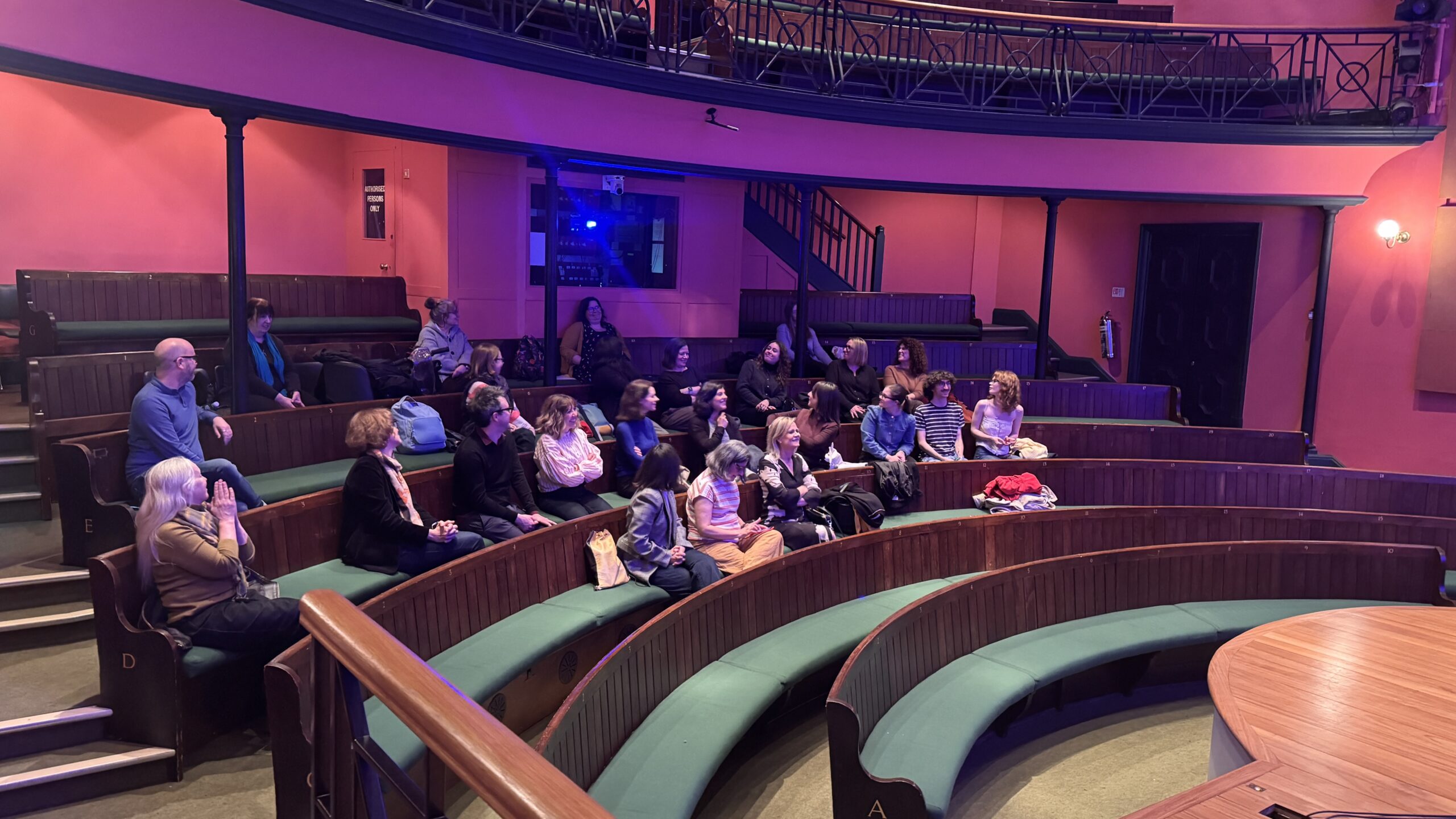
The day concluded with a screening of Mulheres do meu País (Women of My Country, 2019), directed by Raquel Freire, followed by a Q&A with the director and one of the film’s protagonists. The film’s focus on women’s lived experiences and collective, yet non-homogenous identity resonated with the day’s themes of memory and continuity.
On the second day of the symposium, Panel 3 shifted the focus to Spain, exploring women’s roles across journalism, documentary, and design. Nuria Triana Toribio (University of Kent) examined pioneering women journalists such as Mariví Romero and Mari Carmen Izquierdo, emphasising visibility and professional marginality (“primeras y únicas”). Elena Martínez-Acacio (University of Cambridge) analysed political documentary and memory, tracing a line from Después de… (1983) to El silencio de otros (2018), with attention to archival practices and historical justice. Sally Faulkner (University of Cambridge) focused on costume design in My Dearest Señorita (1972), highlighting craft labour, gendered expertise, and the notion of “mucha mano izquierda”. These papers collectively underscored the breadth of women’s contributions behind and beyond the camera.
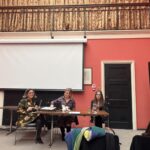
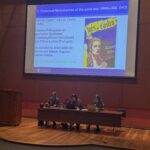
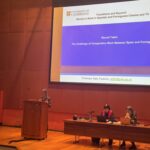
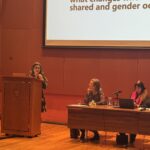
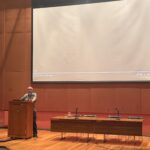
The symposium concluded with a roundtable discussion and a screening of ¡Vámonos, Bárbara! (1978), directed by Cecilia Bartolomé, which was introduced by Isaías Fanlo. The subsequent Q&A on subtitling practices led by Eliana Maestri (University of Exeter) highlighted practices of translation, accessibility, and circulation of women’s cinema across linguistic contexts.
Thank you to everyone who attended, to our wonderful presenters, panel chairs, Eliana Maestri, Peterhouse staff and the students Belle Hunter and Sofia Taylor, and the project support. Stay tuned for a journal special issue featuring the papers presented!


 Leading Women in Portuguese and Spanish Cinema and Television,1970-1980