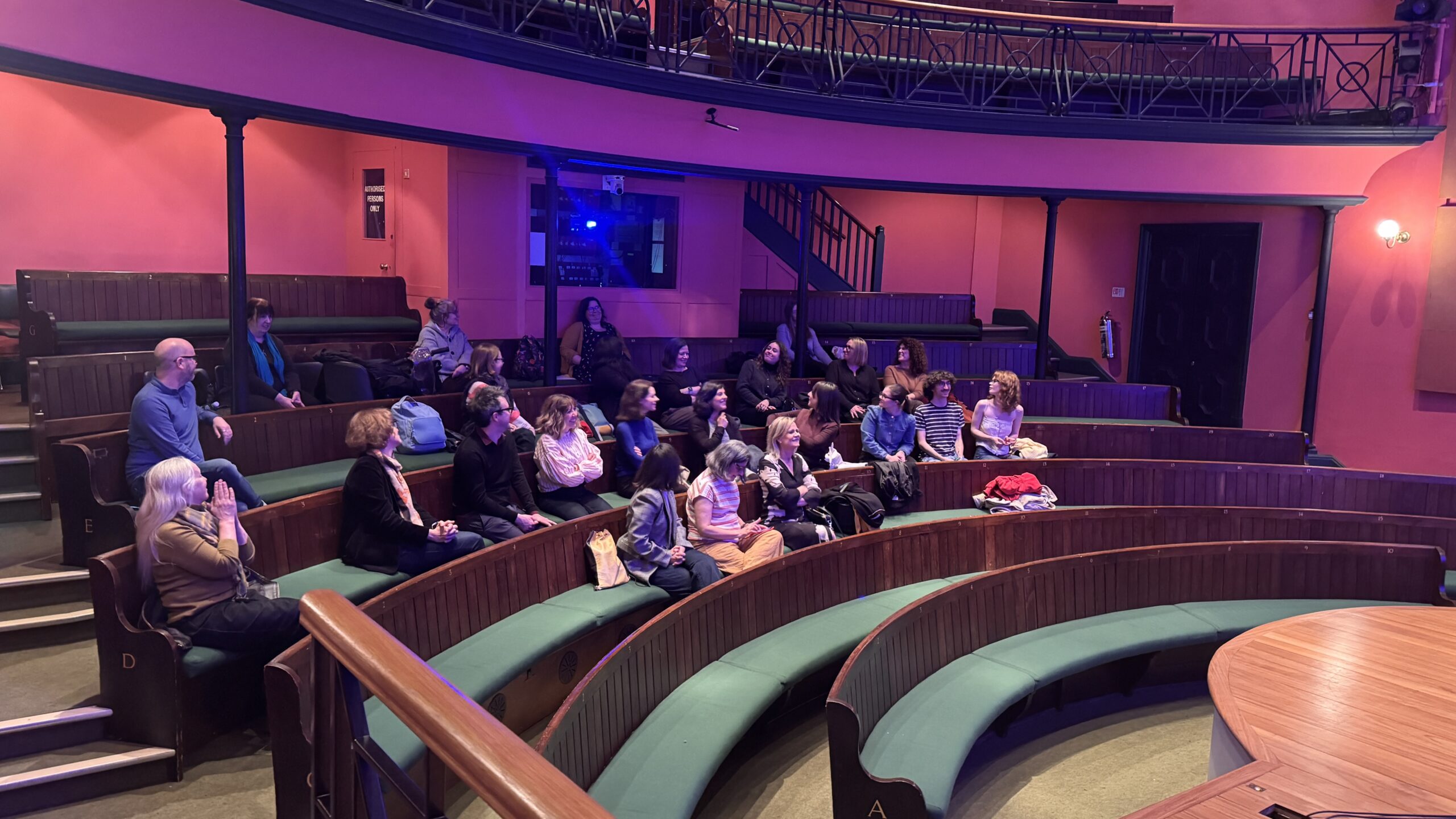
Report: “Transitions and Beyond: Women’s Work in Spanish and Portuguese Cinema & TV” Symposium (20–21 March 2026) The symposium Transitions and Beyond: Women’s Work in Spanish and Portuguese Cinema & TV, held on 20–21 March 2026, was organised by the AHRC-funded project Leading Women in Portuguese and Spanish Film and TV (1970–1980). Bringing together scholars […]
Continue reading...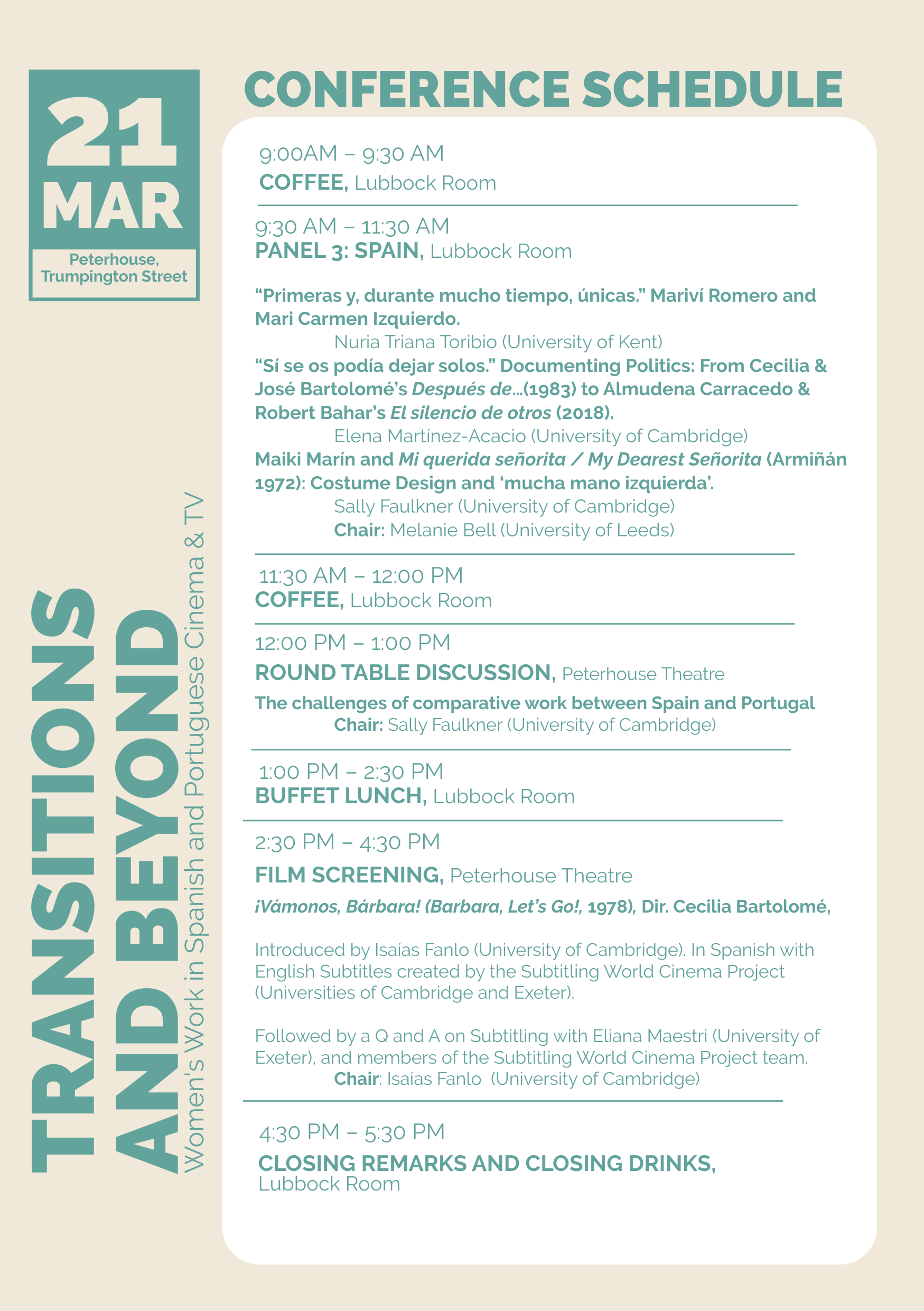
The two-day symposium brings Spanish and Portuguese cinema and television into conversation by comparing the 1970s to the present day. It examines ‘then’ and ‘now’ by considering legacies, genealogies and trans-generational memory. It also reflects on patterns of mentoring, and inspiration, among women in these fields. It explores both individual, and indicative, instances of […]
Continue reading...
Subtitling ¡Vámonos, Bárbara! (Barbara, Let’s Go!, Bartolomé 1978): a Subtitling World Cinema Project Film Screening & Guest Lecture by Professor Sally Faulkner (University of Cambridge) Prof Sally Faulkner’s guest lecture foced on Cecilia Bartolomé’s ¡Vámonos, Bárbara! (1978). The film was subtitled by Exeter MA in Translation Studies students in 2022, co-supervised by Prof. Sally Faulkner and Dr. Eliana Maestri. The event […]
Continue reading...
PROF. SALLY FAULKNER FILM SHOWING ¡Vámonos, Bárbara! (Barbara, Let’s Go!, Bartolomé 1978) & GUEST LECTURE Subtitling ¡Vámonos, Bárbara! (Barbara, Let’s Go!, Bartolomé 1978): a Subtitling World Cinema Project Prof Sally Faulkner’s guest lecture will draw on her most recent monograph, The Cinema of Cecilia Bartolomé: Feminism and Francoism (2024), the first monograph in English on this brilliant, yet forgotten, director. It will also draw on Professor […]
Continue reading...
Transitions and Beyond: Women’s Work in Spanish and Portuguese Cinema & TV A two-day symposium, organised by the AHRC-funded project Leading Women in Portuguese and Spanish Film and TV (1970-1980) is taking place 20–21 March 2026 at Peterhouse, University of Cambridge. The two-day symposium brings Spanish and Portuguese cinema and television into conversation by comparing […]
Continue reading...

 Leading Women in Portuguese and Spanish Cinema and Television,1970-1980